

The first days with a newborn are all warm snuggles, milk-drunk naps, and tiny fingers gripping your shirt. But right up against that new skin is something most of us don’t think about at first: the fabric.
In 2026, organic baby clothes are no longer a niche. They sit right at the intersection of non-toxic materials, sustainability, and smart design. Parents want clothes that are safe on skin, kind to the planet, and practical enough to survive many washes – and maybe even a second or third baby.
This guide walks you through:
- How to choose organic baby clothes and non toxic newborn clothing that are genuinely safer
- The key 2026 trends you should know
- Which certifications and fabrics actually matter
- Trusted brands in the US, Europe/UK, and Australia/NZ
- How to build a simple, non-toxic newborn wardrobe without overbuying
Quick answer: the safest organic baby clothes for newborns
The safest organic baby clothes for newborns are simple, breathable pieces made from certified organic cotton or other natural fibers, dyed with non-toxic dyes, and sewn without added flame retardants, “easy-care” chemical finishes, heavy metals, or strong synthetic fragrances.
For non toxic newborn clothing, look for:
- Recognised labels
- GOTS (Global Organic Textile Standard) – for “organic” on the label, at least 95% of the fibers must be certified organic, and the entire production process (from spinning to sewing) is audited for chemical restrictions and social criteria.
- OEKO-TEX® STANDARD 100 – Product Class I – the strictest level, testing the finished garment (including threads, buttons, zippers and prints) for a long list of harmful substances, with safety limits specifically designed for babies.
- Natural fibers next to the skin
Organic cotton, organic wool, hemp, linen, and lyocell (TENCEL™) from transparent brands. - Thoughtful design
Nickel-free snaps and zippers, soft flat seams, tagless labels, and two-way zippers for easy nighttime changes. - Gentle colours
Undyed cotton and soft, nature-inspired tones often reflect more careful dye processes.
If you want easy, vetted options, brands like Hanna Andersson, Burt’s Bees Baby, Primary, Monica + Andy, Colored Organics, Quince, Honest Baby Clothing, Mini Rodini, Orbasics, Organic Zoo, Little Green Radicals, KIDY, Milinane, ergoPouch and Nature Baby are all strong starting points.
You don’t have to replace everything at once. Start with what’s closest to your baby’s skin – bodysuits, pajamas, sleep sacks and hats – and build from there.
A personal note from Anita
My own children are grown now, but I still live in “babyland”. I’m the aunt who gets the late-night messages:
“Is this onesie too warm?”
“Which organic brand is actually safe?”
From 2007 to 2016, I worked in the magazine world as product manager for the Danish magazine MOR (“mum”), a major title for pregnant women and parents of babies and toddlers up to three years old. My daily work revolved around pregnancy, birth, baby gear, and those intense early years.
Now that I’m older, I often wish we’d had the same knowledge back then that we have today about chemicals, textiles and non-toxic living. With Clean Baby Life, I’m doing everything I can to make it easier for you to protect the little people you love – with clearer information, safer choices, and less overwhelm.
Why organic baby clothes matter for newborn skin
Newborn skin is thinner, less oily, and more permeable than adult skin. Babies also have a higher surface-area-to-body-weight ratio, which means they can absorb more of whatever is on their skin relative to their size.
Conventional baby clothes can involve:
- Cotton grown with synthetic pesticides and fertilizers
- Chemical resins and finishes used for wrinkle resistance, stain resistance or anti-mildew properties
- Dyes and prints that may contain or release unwanted substances if standards are low
Choosing organic baby clothes and certified low-tox garments helps to:
- Reduce exposure to certain pesticides, allergens and potentially harmful residues
- Support farming systems with lower chemical input and better soil and water protection
- Encourage brands to adopt better labor, safety and transparency standards along the supply chain
For you as a parent, the benefit is simple: less guesswork when you dress your baby 24/7.
Toxic chemicals in conventional baby clothes: what we’re trying to avoid
Babies are not just “small adults”. Their bodies are still developing, and that makes them more vulnerable to unwanted chemicals.
Two important points:
- Thinner, more permeable skin
Infant skin can be significantly thinner than adult skin, which makes it a less effective barrier. Chemicals on fabrics can more easily pass through to underlying tissues. - Mouthing and contact
Babies don’t just wear their clothes – they chew sleeves, collars and blankets. That means they can ingest tiny fibres and residues as well as absorb them through the skin.
Here are some of the common chemical groups used in conventional baby clothing, why they’re used, and why many parents choose to minimise them:
- Formaldehyde-based finishes
- Why they’re used: To make fabrics “wrinkle-free”, “non-iron”, anti-shrink or mildew-resistant.
- Why parents worry: Can trigger skin irritation, rashes, allergic contact dermatitis and, in higher or repeated exposures, contribute to respiratory irritation. Formaldehyde is also classified as a carcinogen in certain contexts.
- Pesticide residues from non-organic cotton
- Why they’re there: Conventional cotton is one of the most chemically intensive crops. Traces of agricultural chemicals can remain in the fibres if not properly managed.
- Potential effects: Skin irritation and allergies in sensitive babies, as well as concerns about long-term, low-dose exposure during key developmental windows.
- Azo dyes and problematic colourants
- Why they’re used: To get bright, long-lasting colours.
- Potential effects: Some azo dyes can break down into aromatic amines, a group that includes substances of toxicological concern. Under heat, sweat and friction, poorly controlled dyes can contribute to skin reactions and, in some cases, longer-term risk.
- Plasticisers (phthalates, some BPA-type chemicals) in prints and coatings
- Why they’re used: To make printed designs flexible, add softness to plastics, or create waterproof coatings on fabrics.
- Potential effects: Certain phthalates and similar substances are known or suspected endocrine disruptors, meaning they can interfere with hormone systems. In early life, hormone signalling is crucial for growth, brain development and future reproductive health.
- Flame retardants on some sleepwear and textiles
- Why they’re used: To help garments meet flammability regulations, especially in older standards.
- Potential effects: Some older classes of flame retardants have been linked to hormone disruption, possible effects on the nervous system and concerns about development. Newer chemistries may be less problematic, but many parents still prefer to avoid unnecessary flame-retardant treatments and instead choose snug, breathable sleepwear and safe sleep environments.
- Heavy metals in dyes and accessories
- Why they’re used: Certain metal-based pigments and cheap metal trim (like snaps or decorations) may contain lead, cadmium or other metals if not properly controlled.
- Potential effects: Heavy metals can build up in the body and, at higher levels, are associated with neurological damage and developmental delays. For babies, even small exposures are a concern.
- PFAS (“forever chemicals”) in water- and stain-repellent finishes
- Why they’re used: To make clothes water-, oil- and stain-resistant.
- Potential effects: Some PFAS have been linked to immune system effects, possible effects on thyroid hormones, and other developmental concerns. They are extremely persistent in the environment and can stay in the body for a long time.
The core worry is not one single exposure, but continuous, low-level exposure during a very sensitive period of development. Chemicals can be released from fabrics with friction, heat and sweat, then absorbed through the skin or ingested from chewed sleeves and collars.
Research is still evolving on many of these substances, and not every garment will contain all of them. But this is exactly why many parents:
- Prefer brands that clearly avoid these chemical groups
- Look for GOTS or OEKO-TEX Class I certification, which restrict or test for many of them
- Choose simple, breathable designs instead of highly treated, stain-resistant, heavily printed garments
The goal is not to live in fear, but to reduce unnecessary exposures where it’s relatively easy to do so – starting with the clothes your baby wears all day and night.
What “organic” and “non-toxic” really mean in baby clothing
Words like “eco”, “natural” and “green” on a hangtag are not regulated. Certifications and transparency are what really matter.
GOTS: Global Organic Textile Standard
GOTS is one of the most trusted textile standards worldwide. For a baby garment to be labeled “organic” under GOTS:
- It must contain at least 95% certified organic fibers.
- The production chain – spinning, dyeing, printing, sewing and packing – must follow strict rules on:
- Hazardous chemicals (restricted substances, no most-problematic dyes or finishes)
- Wastewater treatment and environmental management
- Social criteria (no child labour, safe working conditions, basic labour rights)
With GOTS-certified baby clothes, you can be confident the garment is made from organic fibers and processed to minimise harmful residues.
OEKO-TEX® STANDARD 100 (Product Class I)
OEKO-TEX® STANDARD 100 tests the finished product (including all small parts) for a large list of harmful substances.
-
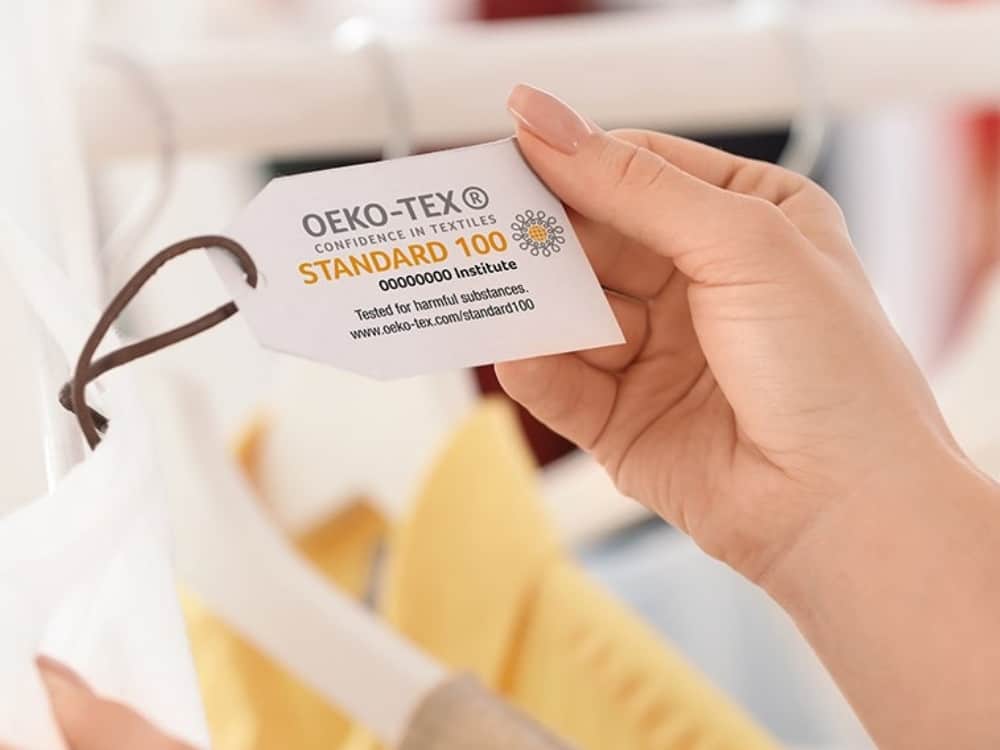
Photo credit to gogonano.com
- Product Class I is specifically designed for babies and toddlers and has the strictest limits.
This label doesn’t mean “organic”, but it does indicate that the garment has passed robust safety testing for substances such as formaldehyde, certain pesticides, some flame retardants, heavy metals, and allergenic dyes.
Other positive signals (and red flags)
Helpful:
- Clear mention of GOTS, OEKO-TEX STANDARD 100 (Class I), Fairtrade, Nordic Swan Ecolabel, or similar strong certifications
- Transparent sustainability pages with real detail (factories, materials, audits)
Red flags:
- Vague statements like “eco-friendly” or “natural” with no specifics
- “Wrinkle-free”, “no-iron” or “stain-resistant” finishes with no explanation – these often signal additional chemical treatments
- Overpowering “chemical” smell when you open the package
Organic baby clothing trends to know in 2026
The 2026 trends aren’t just about cute prints. They reflect deeper shifts toward safer materials, better production, and smarter use of each garment.
Key directions:
- Certified non-toxic as the default
More parents treat GOTS and OEKO-TEX Class I as basic requirements, especially for items worn day and night like bodysuits, pajamas and sleep sacks. - Expanded fabric choices
Alongside organic cotton, brands are exploring:- Hemp and linen for breathability and strength
- TENCEL™ / lyocell for softness and moisture management
- Carefully processed bamboo-based fabrics from more transparent suppliers
- Organic merino wool for temperature-regulating layers
- Water-saving and plant-based dyeing
You’ll see more talk about plant-based dyes and lower-water dye methods, reducing chemical and water footprints while still offering beautiful colours. - Gender-neutral, mix-and-match wardrobes
Earth tones, soft pastels and nature motifs dominate. Fewer “pink vs blue” divides, more gender-neutral basicsthat can move between siblings and friends. - Smart design and multi-functionality
Think two-way zippers, grow-with-me cuffs, convertible rompers, TOG-rated sleepwear and multi-stage garments that stay useful across more than one size. - Resale and circular fashion
High-quality organic baby clothes are increasingly designed to be resold, rented or passed down, turning a good onesie into a mini circular asset instead of a one-baby purchase.
How organic baby clothes are actually used in real life (2026)
Beyond labels and trends, baby clothes have very simple, everyday jobs. In real families, organic garments usually show up in these five ways:
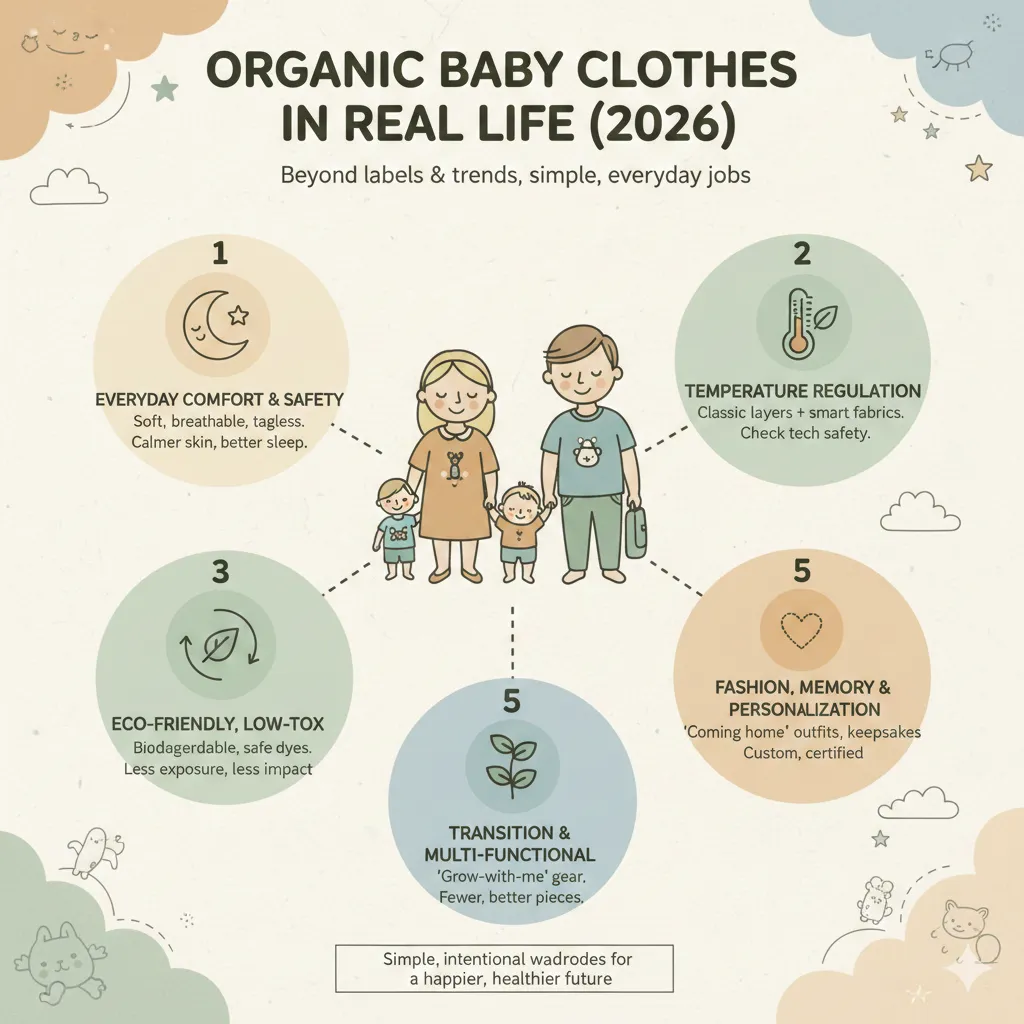
1. Everyday comfort & safety
Soft, breathable bodysuits and sleepers that don’t scratch, pinch or leave marks. Organic cotton with flat seams, tagless labels and gentle dyes can help reduce irritation and support calmer skin and better sleep.
2. Temperature regulation – from classic layers to smart fabrics
Most parents still rely on the timeless combination of organic cotton + wool layers and sensible room temperatures. Some are starting to experiment with smart fabrics that wick moisture, offer UV protection, or adjust insulation slightly.
If you try garments with embedded tech (like sensors), always check:
- Battery and hardware safety
- How they are washed
- What data is collected and where it goes
You don’t need technology to be a good parent – simple, breathable layers are still the foundation.
3. Eco-friendly, low-tox wardrobes
The biggest shift is intent: parents actively choosing organic, biodegradable or recycled materials, low-tox dyes, and brands that publish their chemical policies. The goal is to reduce both environmental impact and chemical exposure in one go.
4. Fashion, memory and personalization
Organic baby clothes are also about feeling and memory:
- A personalised “coming home” outfit
- A plant-dyed romper saved in a memory box
- A first birthday dress made from organic cotton
Personalisation (names, embroidery, custom prints) is growing, but it can still be done on certified fabrics with safe dyes.
5. Transition & multi-functional garments
Multi-use garments reduce clutter and cost:
- Onesies that convert into rompers
- Sleep sacks that cover several size ranges
- “Grow-with-me” pants and tops that last across growth spurts
This fits perfectly with an organic, non-toxic wardrobe where fewer, better pieces get worn more.
Best fabrics for organic baby clothes (and what to be cautious about)
Great next to newborn skin
- Certified organic cotton
Soft, breathable, widely available and easy to wash. Ideal as the backbone of a baby wardrobe. - Organic merino wool
Naturally temperature-regulating, breathable and ideal for layering in cooler climates. Look for mulesing-free wool and clear animal welfare policies. - Hemp and linen
Strong, breathable and often blended with cotton to soften the feel. Great for warmer climates or summer garments. - TENCEL™ / lyocell
A semi-synthetic fiber made from wood pulp in a closed-loop system by responsible brands. Very soft, with excellent moisture management.
Use with care
- Bamboo viscose / bamboo rayon
While bamboo is a fast-growing plant, most bamboo-based fabrics are heavily chemically processed into viscose. If you buy bamboo baby clothes, choose brands that:- Are very transparent about their processes
- Hold strong certifications on the final garment
- Polyester & synthetic blends
Useful for outerwear and some performance garments, but if you’re focusing on non toxic newborn clothing, try to keep synthetics away from direct skin contact, especially at night.
How many organic baby clothes does a newborn really need?
You don’t need a giant wardrobe for a tiny person. A small, well-planned organic capsule wardrobe is easier to wash, store and keep low-tox.
For a typical 0–3 month period, many families do well with:
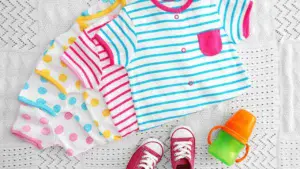
- 8–10 organic cotton bodysuits (mix of short and long sleeve)
- 6–8 footed sleepers / onesies (two-way zippers are your friend at 3am)
- 3–4 soft pants or leggings
- 2–3 sleep sacks or wearable blankets (check tog rating for your climate)
- 3–4 hats (thin newborn caps + a couple slightly warmer hats if needed)
- 6–10 pairs of socks/booties (unless most sleepers are footed)
- 2–3 cardigans or zip-up layers (organic cotton or merino, depending on climate)
Adjust depending on:
- How often you do laundry
- Whether you have help
- Whether your baby tends to spit up a lot or rarely
If you’re in doubt, start on the smaller side. It’s easier to add a few extra basics than to store piles of never-worn outfits.
Trusted organic baby clothing brands (by region)
This list isn’t exhaustive, but it gives you a strong starting point of brands known for organic materials, gentle dyes, and better-than-average transparency.
US & global shipping
- Hanna Andersson
Known for durable pajamas and basics that can be handed down. Many items use organic cotton and hold respected safety certifications. Designed to stay soft after many washes. - Burt’s Bees Baby
Focused on organic cotton basics at accessible price points, especially bodysuits, pajamas and layette sets. - Primary
Vibrant, logo-free basics with growing organic and OEKO-TEX-certified options. Excellent for building gender-neutral, mix-and-match wardrobes. - Monica + Andy
Organic cotton clothing with thoughtful layette bundles (like Cuddle Boxes) and limited-edition prints. Good for gifting and ready-made newborn sets. - Colored Organics
Organic cotton basics with coordinated designs in both neutrals and soft prints. A strong mid-range option focused on better fabrics and style. - Quince
OEKO-TEX-certified organic cotton baby basics and knitwear with a strong value-for-money focus. - Honest Baby Clothing
Super-soft, organic cotton basics designed for comfort and everyday wear.
Europe & UK
- Mini Rodini (Sweden)
Recognised for whimsical prints, organic cotton and strong sustainability commitments, including fair working conditions. - Orbasics (Germany)
Minimalist, EU-made basics from certified organic cotton, designed for durability and long wear. - Organic Zoo (UK/Europe)
Nature-inspired, minimalist styles from organic cotton with a focus on circular fashion and timeless silhouettes. - Little Green Radicals (UK)
Fairtrade and organic cotton designs with bright colours and playful prints. - Milinane (France/Portugal)
Organic cotton onesies, swaddles and accessories with soft, playful prints and strong textile safety testing. - KIDY (Baltic region/Poland)
Combines organic cotton, bamboo and merino wool, with multiple eco labels across lines (such as GOTS or Nordic Swan where applicable).
Australia & New Zealand
- ergoPouch
Highly regarded for organic sleep sacks and sleepwear with clear TOG ratings and breathable natural fibers. Strong focus on safe sleep and temperature regulation. - Nature Baby
Long-established brand specialising in organic cotton and merino layers with a gentle, timeless aesthetic and focus on natural materials.
Choose brands that align with where you live (for customs and shipping) and your values (budget, style, and sustainability depth).
Non-toxic baby clothing checklist (save or screenshot)
Use this checklist when you’re shopping online or standing in a store with a tiny onesie in your hands.
1. Safety & certifications
- GOTS label, especially for items worn daily or at night
- OEKO-TEX® STANDARD 100 – Product Class I on baby items
- Brand clearly states compliance with children’s clothing safety rules in your country
2. Fabrics & finishes
- Main fabric is organic cotton, organic wool, hemp, linen or lyocell (TENCEL™)
- No “no-iron”, “wrinkle-free” or “stain-resistant” finishes mentioned
- No overpowering chemical smell when the package is opened
3. Design & practicality
- Easy to put on and take off (two-way zipper, practical snaps, envelope neckline)
- Flat seams and no scratchy inner tags
- No long cords, drawstrings, or loose decorations for younger babies
4. Sustainability & lifespan
- Colours and style can be shared between siblings (gender-neutral helps)
- Fabric feels soft yet sturdy, not see-through or flimsy
- Design allows several months of wear or easy hand-me-down use
5. Optional: smart or tech features
- If sensors are involved, battery is safely enclosed and washing instructions are clear
- You’re comfortable with any app or data aspect – or you simply choose non-tech garments instead
If a garment ticks most of these boxes, it’s a strong candidate for your non toxic newborn clothing wardrobe.
Care tips to keep organic baby clothes truly low-tox
Even the best organic baby clothes can pick up unwanted residues from detergents and fragrances. A few small habits keep them truly gentle:
- Wash everything before first wear in a mild, fragrance-free detergent, with an extra rinse.
- Skip fabric softeners and heavy scents – they often add quats and synthetic fragrances that cling to fibres.
- Use the lowest effective temperature to protect fabrics; increase only when needed for illness or heavy soiling.
- Air dry when possible, especially for items with elastics or prints.
- Store away from perfumed products, such as scented sachets or strong cleaning chemicals.
If your baby has eczema or very reactive skin, your pediatrician or dermatologist can help refine detergent and fabric choices.
FAQ: organic baby clothes & non toxic newborn clothing
Do babies need a 100% organic wardrobe?
Not necessarily. Think priority, not perfection. Focus first on:
- Sleepwear and sleep sacks worn for long stretches
- Bodysuits and underlayers closest to the skin
- Items your baby chews or sucks on (cuffs, collars, blankets)
You can then gradually replace other items as budget and availability allow.
Is bamboo clothing safe for newborns?
It depends on how it’s made. Bamboo viscose can be very soft, but most bamboo fabrics are heavily chemically processed. If you choose bamboo:
- Look for strong certifications (GOTS or OEKO-TEX STANDARD 100 Class I) on the finished garment
- Treat bamboo as a “nice extra” rather than a must-have if you’re unsure about processing
Are smart textiles worth it for baby clothes?
Smart textiles (temperature-sensitive fabrics, sensor-enabled garments) are an interesting trend, but they’re not required for a safe, comfortable babyhood. For most families:
- Organic, breathable layers
- A safe sleep environment
- Sensible room temperatures
…are more than enough. If you do buy tech-enabled garments, check safety, washing instructions, and data privacy.
How can I avoid greenwashing?
- Look for specific, third-party certifications, not just leaves and buzzwords on the label.
- Read the brand’s “About” or sustainability page: real brands share concrete details, not just feel-good phrases.
- Check whether certifications appear consistently across the range, not just on a single “hero” product.
Final thoughts
Your baby doesn’t need a perfect, Instagram-ready wardrobe. They need a handful of soft, breathable, non toxic newborn clothing pieces that keep them comfortable while you focus on bonding, healing, and finding your rhythm together.
By choosing organic baby clothes with solid certifications and thoughtful design, you lower the chemical load on their skin, support more ethical production, and quietly vote for the kind of world you want them to grow up in.
Start small, buy consciously, and let this wardrobe grow alongside your baby and your values.