
A soft crib sheet can feel like one of the simpler nursery purchases, until the labels start competing for your attention. “Organic,” “natural,” “breathable,” and “non-toxic” all sound reassuring, but they answer different questions.
For lower-chemical crib bedding, start with a snug-fitting cotton sheet, preferably with product-specific GOTS certification. OEKO-TEX STANDARD 100, Product Class I, is another useful option when organic cotton stretches your budget.
Then check the details that matter: mattress compatibility, chemical finishes, and how the sheet fits after washing.
Key takeaways for choosing crib bedding
You don’t need a coordinated bedding set to make a thoughtful choice. A few well-chosen essentials are enough.
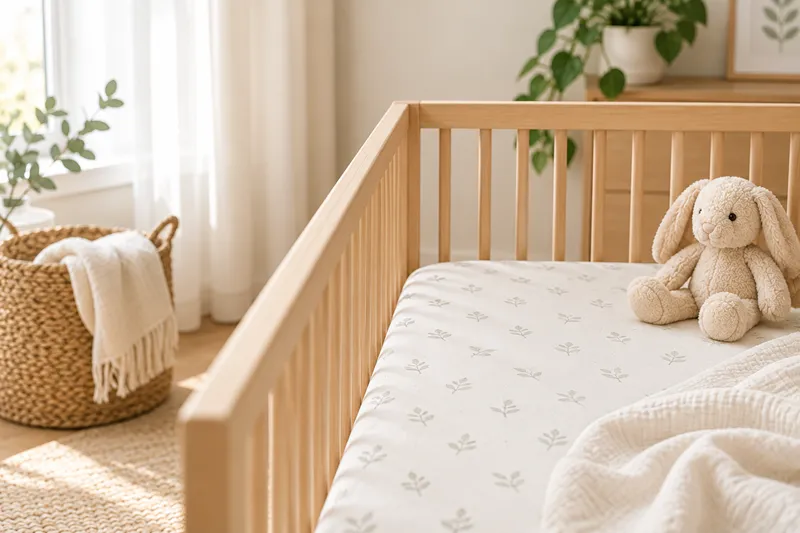
- Choose a fitted sheet designed for your exact mattress size and depth, without loose fabric or added padding.
- Look for GOTS certification for organic textile production, or OEKO-TEX STANDARD 100, Product Class I, for harmful-substance testing.
- Keep the crib bare, and check any waterproof layer separately rather than assuming an organic cotton cover describes the whole product.
“Non-toxic” is a shopping description, not a guarantee of zero exposure. Clear documentation gives you something more useful than a comforting phrase.
Our Picks: Certified Fitted Crib Sheets
1. Naturepedic Organic Sateen Crib Sheet | Best Overall
The Naturepedic Organic Crib Sheet is made from 100% GOTS-certified organic cotton with a smooth, 300-thread-count sateen weave. Designed for standard crib mattresses, it provides a soft, breathable, and washable sleep surface. Its fitted design helps keep the sheet securely in place for everyday use.

Product Specifications
Brand: Naturepedic
Product Type: Fitted Crib Sheet
Color: Ivory
Material: 100% Organic Cotton
Weave: 300-Thread-Count Sateen
Dimensions: 27.5″ x 52″ x 6″
Mattress Compatibility: Standard crib mattresses up to 6 inches deep
Certifications: GOTS Certified Organic Cotton (Control Union), MADE SAFE
Care Instructions: Machine wash warm on gentle cycle; tumble dry low or line dry
Quantity: 1 Fitted Crib Sheet
Why We Recommend It at Clean Baby Life
At Clean Baby Life, we prioritize baby products with verified certifications, transparent materials, and practical everyday features.
The Naturepedic Organic Crib Sheet stands out because its GOTS certification covers organic textile production and processing, rather than relying solely on an organic cotton marketing claim. Its MADE SAFE certification provides additional material screening.
We also appreciate its simple construction, smooth cotton fabric, and compatibility with standard crib mattresses. It is a practical choice for parents looking for a certified organic fitted sheet without unnecessary decorative bedding.
2. Burt’s Bees Baby BEESNUG Fitted Crib Sheet | Best Budget-Friendly Pick
The Burt’s Bees Baby Organic Cotton BEESNUG Fitted Crib Sheet is made from 100% GOTS-certified organic cotton, offering a soft, breathable, and practical bedding option for everyday use.
Designed for standard crib and toddler mattresses, it features BEESNUG 360° elastic and extra fabric overlap around the bottom edges to help maintain a secure, snug fit. The combed and ring-spun cotton is machine washable and designed to withstand regular laundering.
Available in Heather Grey and Cloud White, these neutral colors complement a variety of nursery styles.

Product Specifications
- Brand: Burt’s Bees Baby
- Product Type: Fitted Crib Sheet
- Colors: Heather Grey and Cloud White
- Material: 100% Organic Cotton
- Dimensions: 28″ x 52″ x 5.5″
- Mattress Compatibility: Standard crib and toddler mattresses up to 5.5 inches deep
- Certification: GOTS Certified Organic Cotton (Control Union CU 831717)
- Elastic: BEESNUG 360° Elastic with Extra Fabric Overlap
- Fabric Construction: Combed and Ring-Spun Cotton
- Care Instructions: Machine wash cold on gentle cycle; tumble dry low
- Country of Manufacture: India
- Quantity: 2 Fitted Crib Sheets (1 Heather Grey and 1 Cloud White)
Why We Recommend It at Clean Baby Life
At Clean Baby Life, we recommend crib bedding that combines verified material certifications, practical design, and reasonable pricing.
The Burt’s Bees Baby BEESNUG Fitted Crib Sheet earns a place on our list because its GOTS certification supports its organic cotton claims, while its 360° elastic and extra fabric overlap help keep the sheet securely fitted around standard crib mattresses.
We also appreciate its machine-washable construction and neutral color options. Having two fitted sheets makes everyday laundry changes more convenient without purchasing unnecessary bedding accessories.
3. Babyletto 100% Organic Cotton Crib Sheet in Plain White
The Babyletto 100% Organic Cotton Crib Sheet in Plain White is a soft, lightweight, GOTS-certified muslin sheet designed for standard crib mattresses. Made from 100% organic cotton, it features a breathable fabric and a secure fitted design for everyday use. Its simple, neutral appearance makes it a practical choice for parents seeking certified organic crib bedding without unnecessary decorative features.

Product Specifications
- Brand: Babyletto
- Product Type: Fitted Crib Sheet
- Color: Plain White
- Material: 100% Organic Cotton
- Fabric Type: Muslin Cotton
- Dimensions: 52″ x 28″ x 8.75″
- Mattress Compatibility: Standard U.S. crib and toddler mattresses, approximately 52″ x 27.75″
- Certification: GOTS Certified Organic Cotton
- Fit: 360-Degree Fitted Design
- Care Instructions: Machine wash cold; hang dry or tumble dry low
- Country of Manufacture: China
- Quantity: 1 Fitted Crib Sheet
Why We Recommend It at Clean Baby Life
At Clean Baby Life, we prioritize crib bedding with documented certifications, clearly identified materials, and practical features that support everyday use.
The Babyletto Organic Cotton Crib Sheet earns a place in our recommendations because its GOTS certification supports its organic cotton and textile-processing claims. Its lightweight muslin fabric provides a soft, washable surface without unnecessary padding or decorative additions.
We also appreciate its 360-degree fitted construction, compatibility with standard crib mattresses, and simple white design.
For parents who prefer a relaxed muslin texture over traditional smooth cotton sheets, Babyletto offers a practical certified organic option.
Start with fit and safe sleep
Chemical-conscious shopping comes after the sleep surface itself. An expensive organic sheet cannot make a soft mattress or crowded crib appropriate for infant sleep.
What belongs in your baby’s crib
The American Academy of Pediatrics recommends a firm, flat, noninclined sleep surface with a fitted sheet. Its infant safe-sleep recommendations also call for placing babies on their backs and keeping bedding and soft objects out of the sleep space.
That means no pillows, bumpers, quilts, loose blankets, or padded toppers, even when they’re organic.
Bedding bundles often include pieces that don’t belong in an infant’s crib. Buying sheets separately keeps your shopping focused and avoids paying for extras you’ll need to store elsewhere.
Check the fit after washing
Match the sheet to the mattress manufacturer’s dimensions, including depth. A standard crib sheet isn’t interchangeable with a mini-crib or bassinet sheet.
Once washed and dried according to its label, the sheet should lie smooth, with its corners securely tucked underneath. It shouldn’t bunch up or pull the mattress into a curve.
Look for elastic that holds consistently around the edges. If laundering leaves the corners slipping off or the fabric excessively tight, choose a different sheet. Fit matters more than keeping a purchase that doesn’t work.
Choose fabric you can live with
For everyday crib sheets, organic cotton is a practical starting point. But fiber content, weave, construction, and care instructions all deserve attention.
Cotton, muslin, and linen aren’t interchangeable
A plain cotton sheet is a straightforward choice for parents who want natural fibers and manageable laundry. GOTS-certified organic cotton adds verified organic content and textile-processing requirements.
Muslin describes a fabric construction, not an organic certification. A cotton muslin sheet still needs the same checks for fiber content, finished-product certification, and secure fit. Examine how the fabric settles over the mattress rather than relying on its airy appearance.
Linen is another natural-fiber option, but compare its texture, care requirements, and mattress compatibility before buying. A higher price or a natural fiber name doesn’t establish lower chemical residues.
Comfort doesn’t replace temperature awareness
Organic sheets aren’t proven to prevent eczema or other skin conditions. For sensitive skin, consider the whole picture: fabric texture, detergent residue, fragrance, and any added finishes.
A smooth sheet without rough seams or decorative texture is a sensible starting point. If your baby develops persistent irritation, speak with their healthcare professional rather than repeatedly switching fabrics.
And “breathable” doesn’t mean a product prevents overheating. Room temperature, sleepwear, and additional layers still matter. Avoid heavy, plush, or padded bedding in the infant sleep space, regardless of the material.
You don’t need to reject every synthetic component. Small amounts of elastic are useful for keeping a sheet secure.
Read certifications beyond the front label
Certifications reduce guesswork when they apply to the item you’re buying. A brand’s certified collection doesn’t automatically cover every sheet, print, or accessory it sells.
GOTS covers organic fibers and processing
The Global Organic Textile Standard covers organic fiber content and requirements for textile processing, including chemical restrictions and social criteria.
Under GOTS certification requirements, the “organic” label grade requires at least 95% certified organic fibers. The “made with organic materials” grade requires at least 70%.
Look for the GOTS label and certification details on the finished product. “Made with organic cotton” alone doesn’t establish that the completed sheet is GOTS-certified.
This distinction matters because growing cotton and turning it into dyed, finished fabric are separate stages. Neither label means chemical-free.
OEKO-TEX tests for harmful substances
OEKO-TEX STANDARD 100 assesses textiles against harmful-substance limits. Product Class I applies to products for babies and young children up to age three and has the strictest requirements.
It doesn’t certify organic farming. A conventional cotton or synthetic textile can carry this label.
For sheets, GOTS supports organic production claims, while STANDARD 100 supports substance-testing claims. Both can be useful without being interchangeable.
Mattress labels answer other questions. GREENGUARD Gold concerns chemical emissions; GOLS concerns organic latex; MADE SAFE evaluates materials against its substance criteria. None verifies that a mattress fits your crib or that a sheet stays securely in place.
Check finishes, waterproofing, and fire barriers
Plain fabric with clear documentation is often easier to assess than a product promising stain resistance, antimicrobial protection, and effortless cleaning.
Ask what extra treatments do
For lower-chemical crib bedding, prefer sheets without unnecessary stain-resistant, wrinkle-resistant, or antimicrobial treatments. Those features aren’t needed for a basic fitted sheet.
Don’t judge dyes by color alone. Undyed cotton is an option, but pale fabric isn’t proof of fewer residues, and a certified print isn’t automatically a poorer choice.
For concerns about mattress flame retardants, ask the manufacturer to identify the exact fire-barrier materials. “Meets flammability standards” describes performance, not the ingredients used.
The CPSC mattress and mattress-pad guidance notes that chemically flame-retardant-treated mattress pads require a “T” label. That isn’t a universal labeling rule for sheets or mattresses.
Read waterproof layers separately
An organic cotton surface can sit above a synthetic waterproof barrier. That’s worth understanding, especially when the product’s main description emphasizes only the cotton.
Ask what the barrier contains, whether PFAS are intentionally added, and what documentation supports any PFAS-free claim. “Waterproof” alone doesn’t tell you the chemistry.
If a layer contains vinyl or PVC, ask about its plasticizers, including phthalates. A clearly identified alternative is easier to evaluate than an unexplained “eco” coating.
Use only protectors permitted by the mattress and crib instructions. They should fit securely without adding softness, folds, or padding. Waterproofing can be practical for cleanup, but an organic top layer doesn’t describe everything underneath.
Match your bedding to the mattress underneath
Sheets and mattresses do different jobs. The sheet provides a washable surface; the complete mattress construction must provide appropriate support and firmness.
These materials may appear in different mattress layers, so compare their role rather than treating them as equivalent mattress types.
| Material or component | What to check | Bedding consideration |
|---|---|---|
| Organic cotton | Whether certification covers the textile or finished product | Cotton alone doesn’t establish waterproofing |
| Wool | Its role in padding or a fire barrier | Don’t add loose wool blankets or toppers |
| Latex | Organic certification when claimed, plus complete mattress construction | A latex layer doesn’t establish infant firmness |
| Waterproof barrier | Exact material and supported chemical claims | Follow instructions before adding another protector |
The takeaway is simple: layer transparency matters more than one appealing ingredient. None of these materials establishes safe-sleep suitability on its own.
For a closer look at mattress construction and buying options, Clean Baby Life’s non-toxic crib mattress guide covers brands including Naturepedic, Avocado, My Green Mattress, and Newton. Compare the exact model rather than transferring claims across a brand.
If a new mattress has a strong odor, contact the manufacturer before use and discuss its materials and return options. Smell alone doesn’t establish toxicity, and the absence of smell doesn’t prove low emissions. Don’t rely on an arbitrary airing-out period as reassurance.
Buy fewer pieces and care for them thoughtfully
The best purchase is one you can wash, fit correctly, and keep using. Fancy packaging won’t help during a nighttime sheet change.
Spend on the pieces you’ll use
Two or three fitted sheets give you a practical rotation, depending on your laundry routine. You don’t need matching crib accessories to complete the setup.
If the budget allows, prioritize a GOTS-certified cotton sheet with clear sizing and straightforward care instructions. If it doesn’t, a well-fitting STANDARD 100, Product Class I, cotton sheet is a reasonable alternative.
Compare usable value rather than thread count or the number of pieces in a bundle. Before buying, read the return policy and any guidance about shrinkage. A premium sheet that no longer fits after laundering isn’t a helpful upgrade.
Let the care label guide laundry
Wash new sheets before use according to their care instructions. This is ordinary preparation, not a way to turn an undocumented textile into a verified lower-chemical product.
Choose fragrance-free detergent if you’d like to avoid added scent, and rinse thoroughly. Fabric softener and scent beads aren’t needed to make crib bedding comfortable.
Follow the specified washing and drying settings rather than assuming all organic cotton tolerates the same treatment. Check the fit, seams, and elastic afterward.
Change sheets promptly when wet or soiled, and wash as needed for your baby’s routine. There isn’t one evidence-based washing interval for every organic sheet and household.
If you’re comparing longevity, look for product-specific care guidance or published testing. An organic label alone doesn’t predict shrinkage or elastic durability.
Frequently Asked Questions
Is organic crib bedding automatically non-toxic?
No. Organic certification covers specific fiber and processing requirements, but it doesn’t mean a product is chemical-free or describe every component. Check the certification for the exact finished product and review any added finishes or waterproof layers.
How many crib sheets do I need?
Two or three fitted sheets are a practical rotation for many households, depending on your laundry routine. Prioritize secure fit and clear care instructions over buying a coordinated set.
Does muslin make a safer crib sheet?
Muslin describes a fabric construction, not an organic or safety certification. Check its fiber content, product-specific documentation, and fit after washing just as you would with any other sheet.
Should I use a waterproof crib mattress protector?
A protector can make cleanup easier, but check that the mattress and crib instructions permit it and that it fits securely without adding softness or padding. Review the barrier material separately; an organic cotton surface doesn’t describe the layer underneath.
A simpler crib is a thoughtful choice
Choose bedding in this order: correct fit, a firm and bare sleep surface, then documented materials and certifications. A few washable sheets with clear product information are enough.
You don’t have to create a chemical-free nursery or replace everything at once. Start with what your baby sleeps on, and choose the option that fits both the mattress and your everyday routine.
That soft sheet can stay a simple purchase when you know which details deserve your attention.