
Finding something cozy gets confusing when organic fabrics, warmth ratings, and safety claims compete for your attention. The best organic sleep sack for your baby is a well-fitting, nonweighted sack with clear material details and the right warmth for your room.
Our top pick is the ergoPouch Cocoon Swaddle Sack, made with GOTS-certified organic cotton. For a lightweight option made from 100% organic cotton, choose the LÄSSIG Muslin Sleeping Bag GOTS.
A wearable blanket gives your baby a warm layer without adding a loose blanket to the crib. Start with fit and warmth, then compare fabric, closures, and laundry needs against your budget and routine.
Quick Answer: The Best Organic Sleep Sacks at a Glance
The ergoPouch Cocoon is our best overall pick. Choose LÄSSIG for lightweight organic cotton, Burt’s Bees Baby for a budget-friendly option, MORI for easy front access, or Sézane for a premium design.
| Product | Best for | Key materials or certification | Main trade-off |
|---|---|---|---|
| ergoPouch Cocoon Swaddle Sack | Best overall | GOTS-certified organic cotton; several TOG options | The lighter versions are not 100% cotton |
| LÄSSIG Muslin Sleeping Bag GOTS | Lightweight 100% organic cotton | GOTS-certified organic cotton muslin; 1.0 TOG | Less warm than padded options and easiest to find from European retailers |
| Burt’s Bees Baby Warmer Beekeeper | Budget | Organic cotton jersey shell; 1.5 TOG | Polyester fill |
| MORI Front Opening Sleeping Bag | Easy night changes | Bamboo viscose and organic cotton; 2.5 TOG | Polyester fill and a fabric blend that is 30% organic cotton |
| Sézane Hearts Sleeping Bag | Premium option | Organic cotton outer and lining; OEKO-TEX STANDARD 100 Class I; 2.5 TOG | Premium price and polyester padding |
Why This Matters for Your Baby
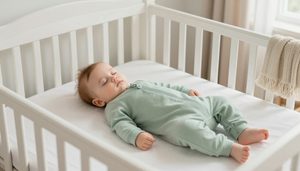
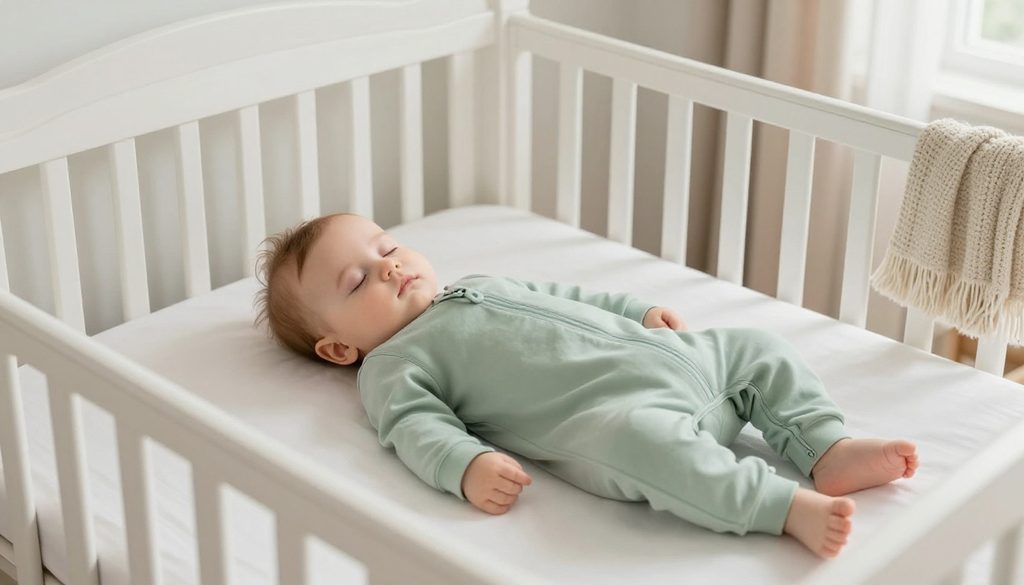
A wearable blanket can keep a warm layer around your baby without leaving a loose blanket in the crib. That makes it useful once you need more warmth than pajamas alone provide.
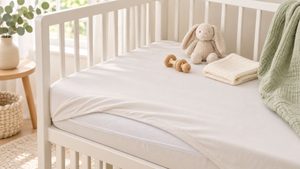
The AAP’s safe-sleep recommendations call for placing babies on their backs on a firm, flat, noninclined sleep surface. Keep only a fitted sheet on the mattress, with no pillows, bumpers, toys, quilts, or loose bedding.
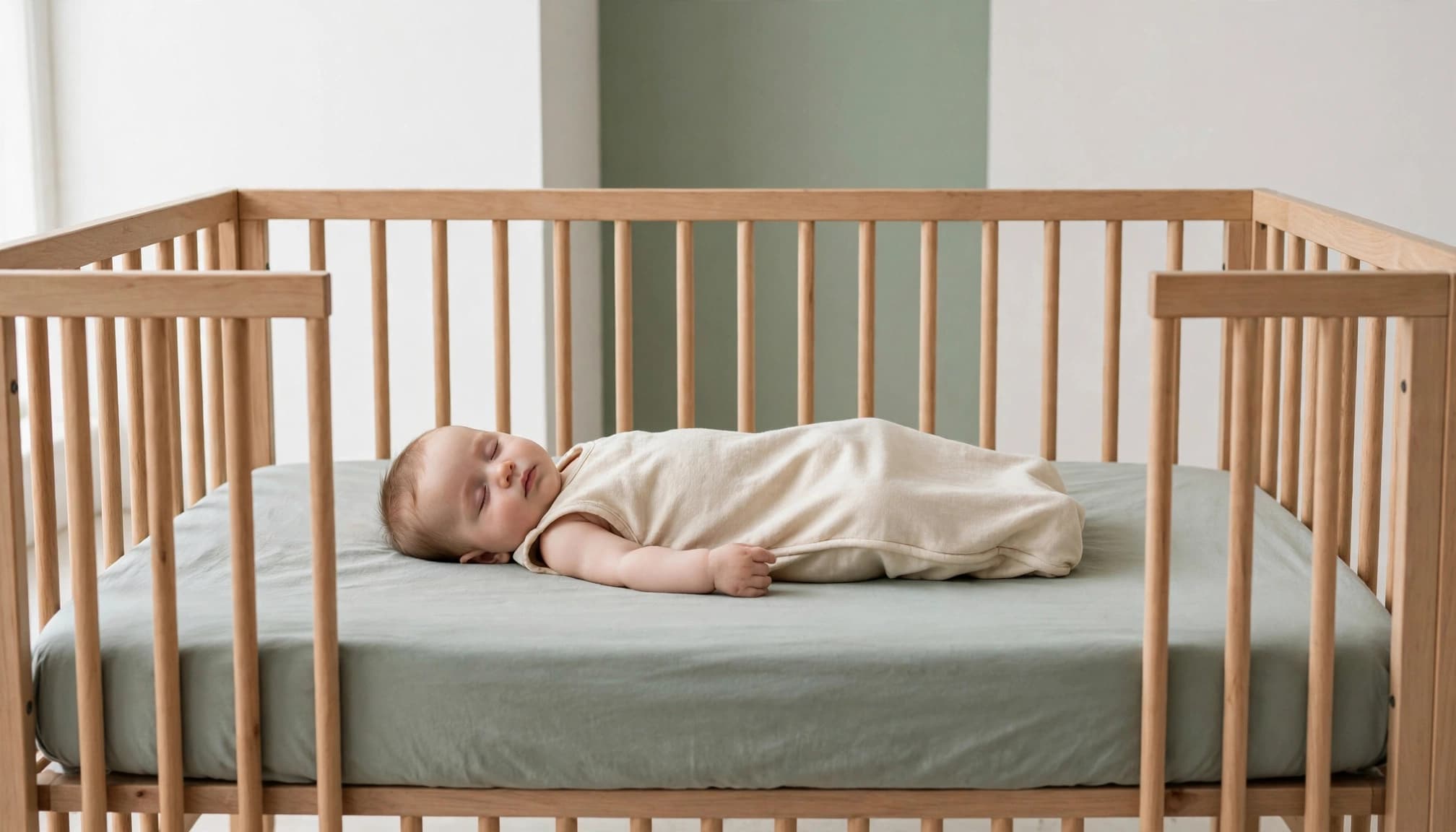
The sack must fit properly and stay below your baby’s head. Choose a nonweighted design, and leave the arms free when you’re buying a regular sleep sack rather than a swaddle.
A sleep sack supports this setup; it doesn’t replace safe-sleep practices. Organic fabric cannot make a soft mattress or crowded crib suitable for infant sleep.
Our organic crib sheets guide explains how fitted sheets and mattress compatibility work together. Buying the sheet separately also helps you avoid paying for decorative bedding that belongs outside the crib.
Best Organic Sleep Sacks: Our Top Picks
These five picks suit different rooms, budgets, and bedtime routines. Choose the one that fits your baby now and provides the warmth your room needs.
ergoPouch Cocoon: Best Overall Organic Sleep Sack
Best for: Parents who want a swaddle-style sack that can transition to arms-free use.
The ergoPouch Cocoon is our top pick because it combines GOTS-certified organic cotton with a design that adapts as your baby grows. The two-way zipper makes diaper changes easier, while arm poppers turn it from a swaddle into an arms-free sleep sack when your baby shows signs of rolling.

Materials vary by warmth rating:
- 0.2 TOG: 95% organic cotton and 5% elastane.
- 1.0 TOG: 55% organic cotton, 40% bamboo viscose, and 5% elastane.
- 2.5 TOG: A 95% organic cotton outer, bamboo viscose lining, and organic cotton filling.
The Cocoon also comes in a 3.5 TOG option, giving you another choice for a cooler room.
Trade-off: The lighter versions are not 100% cotton. The 1.0 TOG blends in bamboo viscose, while the 0.2 TOG contains elastane.
LÄSSIG Muslin Sleeping Bag: Best Lightweight Sleep Sack (100% Organic Cotton)
Best for: Parents who want a lightweight sleep sack made from 100% organic cotton.
The LÄSSIG Muslin Sleeping Bag GOTS is made from GOTS-certified organic cotton muslin and has a 1.0 TOG rating. Its full-length zipper makes dressing easier, and a chin guard covers the top of the zipper.
On a mild evening, you can pair it with sleepwear suited to your baby’s room.
Trade-off: It is less warm than padded options and easiest to find from European retailers.
Burt’s Bees Baby Beekeeper: Best Budget Organic Sleep Sack
Best for: Parents looking for a budget-friendly sleep sack with an organic cotton shell.
The Solid Organic Warmer Beekeeper has a 100% organic cotton jersey shell and a 1.5 TOG rating. Its soft jersey surface feels familiar if your baby already wears cotton pajamas.

It offers more insulation than an unfilled sack, making it an option for a cooler bedtime routine.
Trade-off: The filling is polyester, so the complete sack is not all cotton.
MORI Front Opening Sleeping Bag: Best for Easy Night Changes
Best for: Parents who want easy front access and a warmer sleep sack.
MORI’s 2.5 TOG Front Opening Sleeping Bag combines 70% bamboo-derived viscose with 30% organic cotton fabric. The front opening makes it easy to dress a sleepy baby after a diaper change.
The fabric has a smooth feel, making it an appealing choice if you prefer a viscose-cotton blend.
Trade-off: The sack has polyester filling, and organic cotton makes up 30% of its fabric blend.
Sézane Hearts Sleeping Bag: Best Premium Organic Sleep Sack
Best for: Parents who want a warmer, premium sleep sack with organic cotton against the outer and lining.
The Sézane Ecru / Multico Hearts Sleeping Bag has organic cotton outer fabric and lining, recycled polyester padding, and a 2.5 TOG rating. It also has a listed OEKO-TEX STANDARD 100 Class I certificate.
Its padded construction makes it an option for a cooler bedtime routine.
Trade-off: It has a premium price and polyester padding.
How We Chose
We prioritized clear material and certification details, along with sizing, TOG ratings, care instructions, and designs suited to safe sleep. We also considered diaper-change access and value across different budgets.
How to Choose an Organic Baby Sleep Sack
The best organic sleep sack for babies should make ordinary nights easier. Comfortable fabric matters, but so do secure openings, manageable washing instructions, and access during changes.
Choose a fit that works now
Use your baby’s current measurements and the maker’s size chart, rather than buying a larger size to extend wear. Age labels are a starting point because babies of the same age can differ considerably in size.
The neck opening should stay below the chin without allowing your baby’s head to slip inside. Arm openings should also fit securely, while the lower sack allows comfortable leg movement.
After washing, check the fit again. Shrinkage or stretched openings can change how a garment sits.
A second sack can make laundry easier, but start with a small rotation. You can add another once you know which fit and fabric work well.
Match warmth and construction to your routine
TOG measures warmth. Higher numbers indicate greater insulation, so consider the room temperature together with pajamas and other clothing layers.
For example, LÄSSIG associates its 1.0 TOG muslin sack with about 64 to 75°F [18 to 24°C]. Follow the guidance for your chosen design. HealthyChildren’s safe-sleep guidance also addresses overheating.
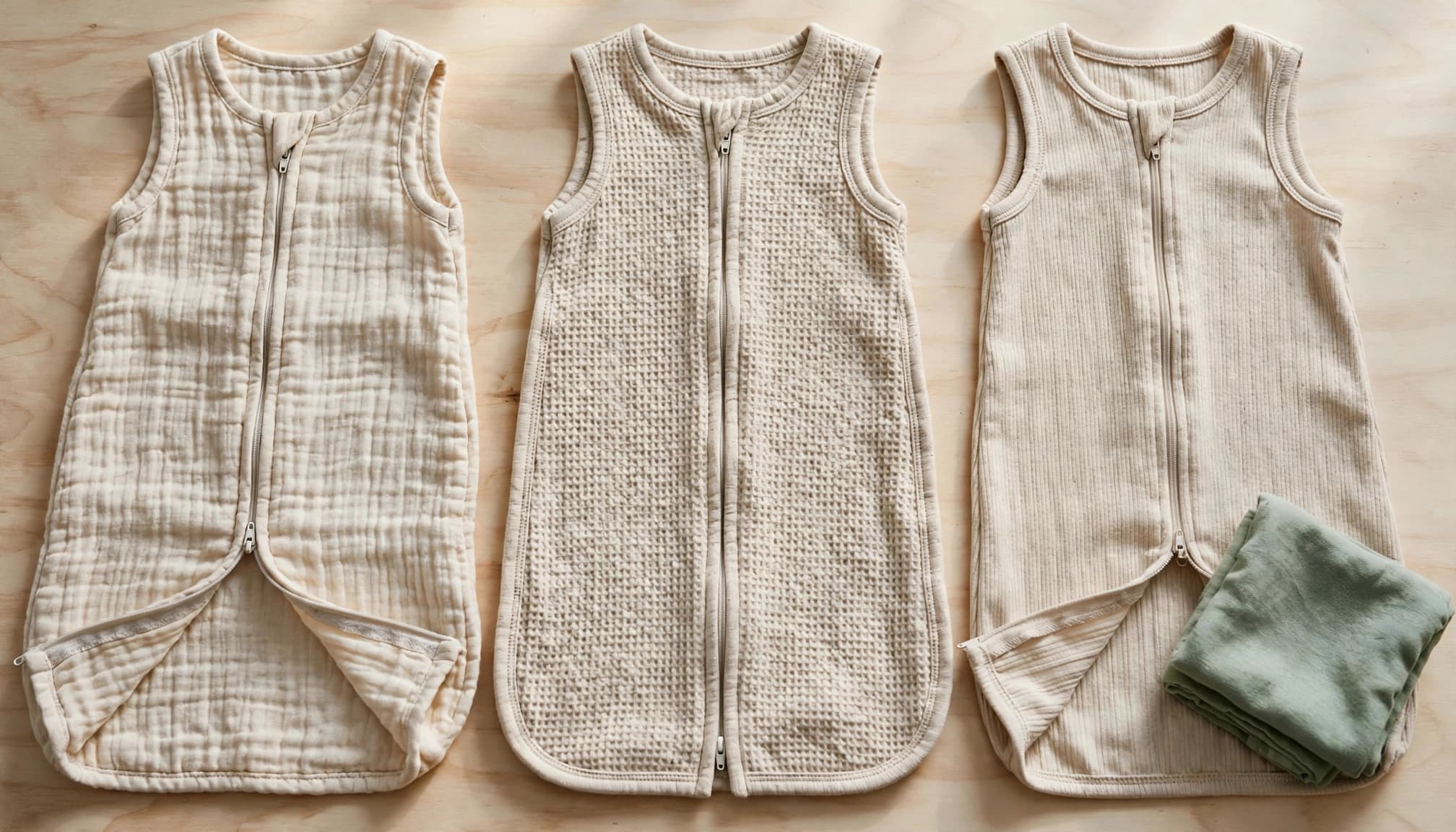
Compare smooth jersey with textured muslin, then read the laundering directions. A sack that takes longer to dry may make a spare useful.
Finally, consider zipper placement. A two-way zipper can simplify diaper access, while a front opening helps with dressing. Choose the arrangement that suits your nighttime routine.
How to Read Organic and Textile Certifications
Organic production and harmful-substance testing answer different questions. Understanding the difference helps you choose the details that matter most to your family.
GOTS covers organic fibers and textile processing
The Global Organic Textile Standard addresses organic fiber content and textile processing, including chemical restrictions and social requirements.
Its “organic” grade requires at least 95% certified organic fibers. The “made with organic materials” grade requires at least 70%.
An organic-cotton ingredient claim tells you about that material. Certification details for the finished sleep sack give you a broader picture of the garment.
OEKO-TEX tests textiles for harmful substances
OEKO-TEX STANDARD 100 assesses textiles against harmful-substance limits. Product Class I applies to products for babies and young children up to age three and has the strictest requirements.
When certification covers the finished garment, its scope includes components such as threads, zippers, and prints. STANDARD 100 does not certify organic farming, so it answers a different question than GOTS.
Frequently Asked Questions
What does 1.5 TOG mean for a sleep sack?
A 1.5 TOG rating describes the sleep sack’s insulation. It is warmer than a 1.0 TOG sack and lighter than a 2.5 TOG sack. Check the maker’s guidance for your room temperature and your baby’s clothing.
When should you use a 2.5 TOG sleep sack?
A 2.5 TOG sleep sack can suit a cooler room. Follow the maker’s room-temperature and clothing guidance for the specific sack you choose.
How many sleep sacks do you need?
Two sleep sacks are a practical starting point: one for your baby to wear and one for laundry days. You may want a third if you do laundry less often or need different warmth levels.
When should you stop using sleep sacks?
There is no single age when every child needs to stop using an arms-free sleep sack. You can continue while it fits properly and suits your child’s needs, following the maker’s size guidance.
Swaddling is different: stop using a sack with the arms enclosed as soon as your baby shows signs of trying to roll.
Choose Fit First, Then Fabric
The ergoPouch Cocoon is our top pick for its organic cotton fabric and swaddle-to-arms-free design. Choose the LÄSSIG Muslin Sleeping Bag GOTS if you want a lightweight option made from 100% organic cotton.
For a budget-friendly option, consider Burt’s Bees Baby. MORI suits easy changes, while Sézane offers a premium padded design.
Whichever sack you choose, look for a secure fit and the right warmth for your baby’s room.