
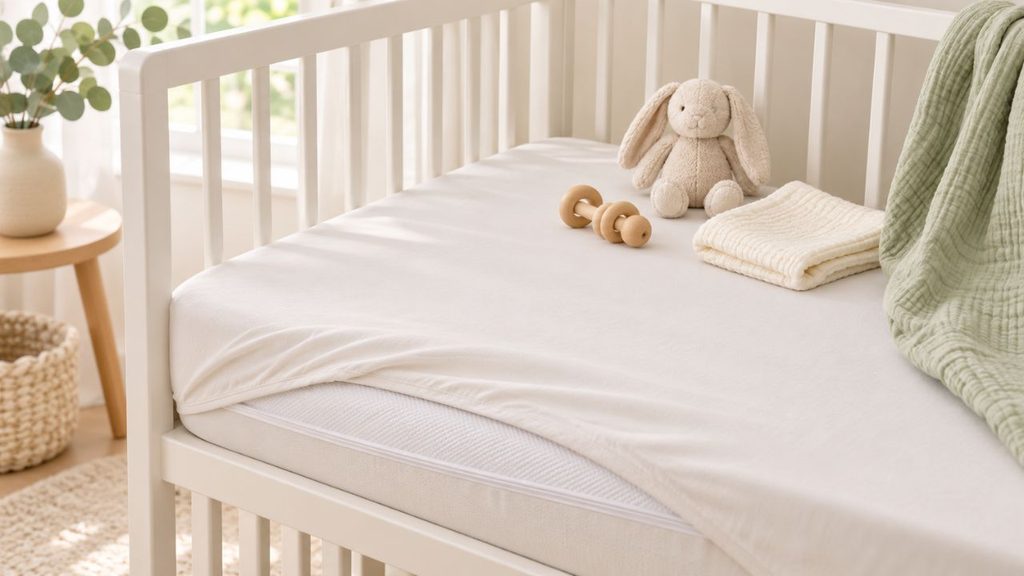
A damp sheet at 2 a.m. is enough laundry without adding a soaked mattress. If you’re choosing a non-toxic crib mattress protector, start by comparing the materials, waterproof barriers, and fit of each option. Naturepedic is our first pick for its clearly disclosed construction.
But clear materials matter more than a reassuring product name, and even an organic cotton protector can contain synthetic waterproofing.
Start with the construction, then check whether the protector works with your baby’s exact mattress and sleep setup.
Which non-toxic crib mattress protector should you choose?
#1 Naturepedic Waterproof Organic Crib Mattress Protector: Best Overall
EDITORIAL PLACEHOLDER. DO NOT PUBLISH. Insert Naturepedic Lasso product box here using the approved Rakuten Advertising affiliate link, or a verified alternative in the interim. Check destination from Europe before publication.
Naturepedic’s Waterproof Organic Crib Mattress Protector Pad combines two layers of GOTS certified organic cotton jersey with a TPU waterproof backing. It’s an organic cotton mattress protector, but TPU is synthetic, so it isn’t plastic-free.

This premium protector comes in flat, fitted, and fitted oval versions. It is machine washable and dryer safe.
This is a useful starting point if you want organic cotton surfaces, disclosed waterproofing, and straightforward care. Choose the version compatible with your mattress manufacturer’s instructions.
Skip it if your priority is avoiding polyurethane altogether. And don’t assume the finished protector is GOTS-certified: the available product information establishes certified cotton, not a separate finished-product certification.
Before ordering, choose the correct size and check the current price for that version.
#2 Avocado Organic Waterproof Crib Mattress Protector: Best for Verified PFAS-Free Protection
Avocado’s crib protector has the strongest documentation we found. It is made from about 95% GOTS-certified organic cotton, with a thin polyurethane waterproof membrane sandwiched between two cotton layers. There is no vinyl or PVC, and no fire retardants or antimicrobial treatments. It also carries OEKO-TEX STANDARD 100 Class I (the baby category), GREENGUARD Gold and MADE SAFE certification. Avocado had every component tested for 679 PFAS substances by an accredited lab, with none detected, and publishes the reports. It fits standard crib mattresses up to 8 inches deep.
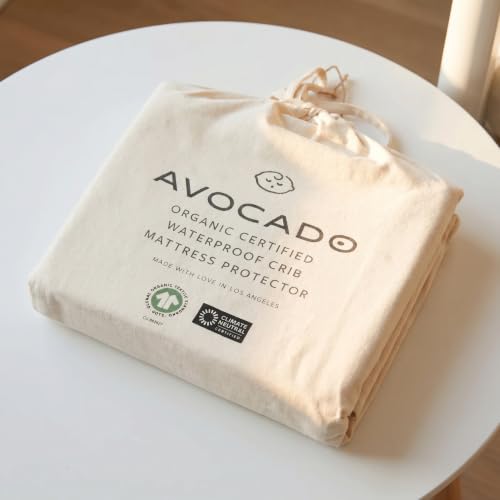
Trade-off: it is a fitted pad, not a zippered encasement, so it is not an allergen or dust-mite barrier.
#3 Brentwood Home Organic Waterproof Crib Protector Pad: Best Value Organic Protector
Brentwood Home’s protector uses two layers of GOTS-certified organic cotton with a thin polyurethane film in between, and contains no vinyl, PVC or phthalates. It is GREENGUARD Gold certified, which means it is tested for low chemical emissions, including VOCs and formaldehyde. It fits standard crib mattresses up to 8 inches deep and is made slightly oversized, because it shrinks over the first few washes. It is a good choice if you want certified organic cotton at a slightly lower price.
Trade-off: like all thin waterproof films, the barrier wears down over time with washing and use, so check it regularly.
What makes a waterproof protector lower-toxin?
Organic cotton describes the fabric, not every layer
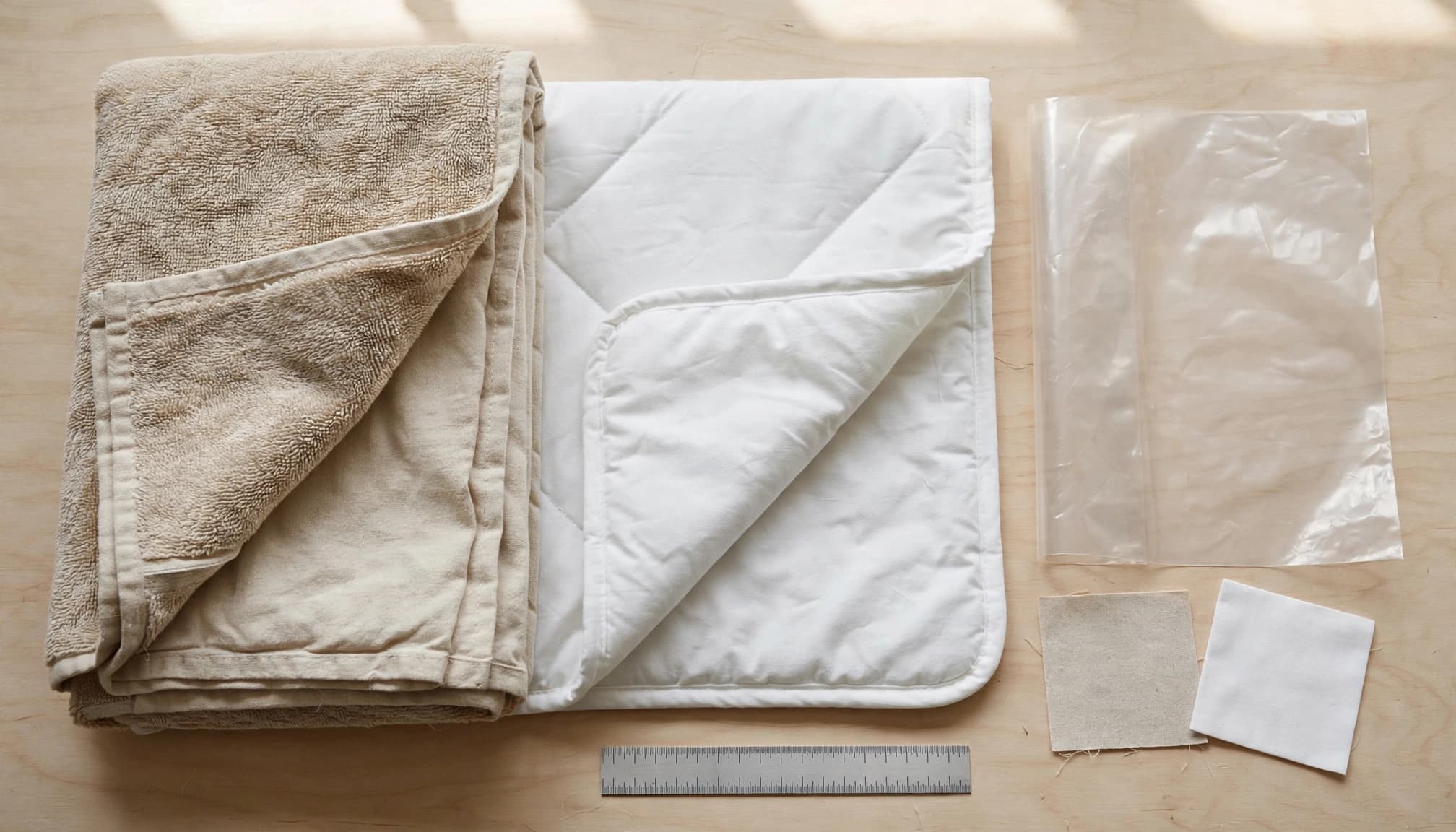
Cotton is absorbent, but it doesn’t create a reliable waterproof barrier on its own. A waterproof crib mattress protector usually needs another material between or beneath its textile layers.
That waterproof backing may be made from polyurethane, TPU, or polyethylene, depending on the product. These materials aren’t interchangeable, and none becomes organic because cotton surrounds it.
Naturepedic’s protector illustrates the distinction: its disclosed barrier is TPU. Don’t confuse that construction with waterproofing used in the brand’s mattresses.
A cotton-only pad may suit families who don’t need waterproof protection. But absorbency and waterproofing do different jobs, so check the description before relying on it for diaper leaks.
Ask about finishes as well as the barrier
For a material-conscious shortlist, prioritize clearly disclosed construction and avoid PVC or vinyl when suitable alternatives are available. Ask whether the exact protector contains intentionally added PFAS, stain-resistant treatments, antimicrobial finishes, or chemical flame retardants.
Waterproofing doesn’t automatically require PFAS. Still, “waterproof” alone tells you nothing about whether those substances are present.
The same care applies to BPA/BPS and phthalate claims: a badge excluding one substance doesn’t explain every layer.
Which certifications matter for crib protectors?
GOTS: organic textiles and processing
The Global Organic Textile Standard, or GOTS, covers organic textile production and processing requirements. The Organic Trade Association explains its role in maintaining organic textile integrity through the supply chain.
Look for GOTS certified organic cotton, but remember the GOTS “organic” label requires at least 95% of the fibers to be certified organic. That doesn’t mean 95% of every component in a waterproof product is cotton.
Pay attention to the wording. “Made with GOTS-certified cotton” and “GOTS-certified finished product” describe different levels of coverage. Neither phrase turns a synthetic waterproof barrier into a natural fiber.
GREENGUARD Gold and MADE SAFE: different questions
GREENGUARD Gold evaluates chemical emissions, including volatile organic compounds. A GREENGUARD Gold certified product may be relevant to nursery air quality, but the certification doesn’t establish that it’s organic or plastic-free.
MADE SAFE evaluates materials against its program requirements. A MADE SAFE certified product provides another screening signal when the exact product is certified.
These labels answer different questions, and no single nontoxic certification establishes every material or product claim. A clear combination can be helpful, but several logos on a brand homepage aren’t proof that every accessory qualifies.
For a non-toxic crib mattress protector, look for third-party certifications and documentation tied to the protector itself. Mattress certificates, company-wide promises, and retailer descriptions are starting points for checking, not substitutes for product-specific documentation.
Fit and firmness come before extra features
Choose the right shape and depth
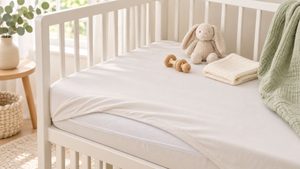
For standard size crib mattresses, matching the listed length and width isn’t enough, so check mattress depth and manufacturer instructions before choosing a protector. Standard rectangular, mini-crib, and oval products aren’t interchangeable.
Naturepedic lists these versions:
| Version | Listed dimensions |
|---|---|
| Flat crib pad | 28 × 52 inches |
| Fitted crib pad | 28 × 52 × 6 inches |
| Fitted oval crib pad | 27 × 47 × 3 inches |
The fitted versions include a depth measurement; the flat version doesn’t wrap around the mattress in the same way. Choose according to manufacturer compatibility, not dimensions alone.
After fitting it, check for bunching, lifted corners, or pulling that changes the mattress surface.
Keep the sleep surface firm and flat
The CPSC’s safe-sleep guidance emphasizes a bare sleep space with a fitted sheet and placing babies on their backs.
Before adding a protector underneath that sheet, follow the crib and mattress manufacturers’ instructions. Avoid fluffy toppers, thick quilted padding, and loose layers.
A protector shouldn’t soften the infant sleep surface or interfere with the mattress fit. “Breathable” marketing doesn’t replace those basics.
If the mattress itself needs attention, our guide to lower-emission crib mattress options covers the separate questions of mattress construction, firmness, and certifications.
Budget and washing: the everyday details
Spend on useful protection, not extra layers
First, check whether your mattress has a waterproof mattress cover or wipe-clean surface. If it does, follow the manufacturer’s instructions to decide whether you need a separate waterproof protector.
Naturepedic is a premium option. Compare the materials, fit, and care instructions of all three selected protectors rather than relying on price alone.
If two protectors would strain your budget, start with one compatible option. A spare can be convenient during washing, but you don’t need a closet full of nursery bedding.
Avoid stacking protectors and sheets for faster overnight changes unless the mattress manufacturer expressly permits that arrangement. Convenience shouldn’t change the sleep surface.
Follow the care label to protect the barrier
Wash before first use according to the manufacturer’s instructions. Naturepedic lists machine washing and drying, but the product’s care label should guide temperature and cycle choices.
Too much heat or unsuitable laundry products can damage some waterproof membranes. Don’t assume instructions for cotton clothing apply to the whole protector.
After washing, check that it still fits without pulling or bunching. Inspect the backing for cracks, separation, or visible damage, and replace it if the waterproof layer fails.
A strong odor deserves a question to the manufacturer, but smell isn’t a reliable chemical test. Neither a pleasant scent nor no scent proves certification.
Key takeaways
- Naturepedic is our first pick, with organic cotton layers and a disclosed TPU barrier. Two additional picks will be added after product verification.
- Certification claims should match the exact protector, not just its fabric supplier or the mattress beside it.
- Manufacturer compatibility, a firm sleep surface, and proper care matter more than extra padding or impressive marketing.
Frequently asked questions
Does a non-toxic crib mattress protector need to be plastic-free?
No. “Non-toxic” isn’t a universal certification, and a waterproof protector can combine organic cotton with a disclosed synthetic barrier.
If avoiding plastic is your priority, consider whether an absorbent textile pad meets your needs. Don’t expect the same leak protection, and check that the mattress manufacturer permits it.
Can a protector reduce mattress off-gassing?
Don’t buy an ordinary protector as an emissions-control solution. Waterproof performance doesn’t establish that it blocks volatile organic compounds.
A protector also won’t correct an unsuitable mattress, poor fit, or insufficient firmness. Evaluate mattress materials and emissions separately rather than treating another bedding layer as a remedy.
Is a thicker organic pad better for infant sleep?
Organic fibers don’t make extra softness appropriate. Johns Hopkins’ infant sleep guidance emphasizes a firm, flat surface and a tightly fitting mattress.
Choose protection that preserves that setup. Save cushioned comfort features for products and ages where they’re appropriate, rather than adding them to an infant’s crib.
A simpler choice for cleaner, easier nights
The useful goal is less guesswork: a compatible protector with disclosed layers, accurate certification claims, and care instructions you can follow.
Naturepedic is our first pick for its disclosed organic cotton and TPU construction. Compare the full three-product shortlist and check your mattress manufacturer’s fit guidance before ordering.
You don’t need perfect nursery materials overnight. A well-chosen protector can make the next wet-sheet change simpler without adding unnecessary complexity.