
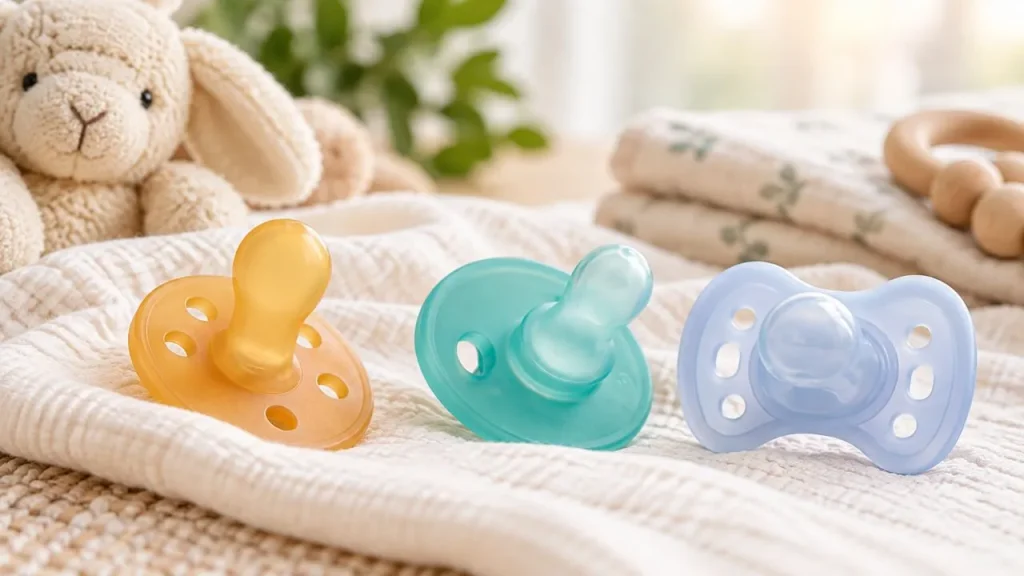
When comparing non-toxic pacifiers, begin with the material, a one-piece design, and the size recommended for your baby. Natursutten offers a soft natural rubber option, Philips Avent Soothie is made from one-piece silicone for newborns, and Chicco PhysioForma provides an all-silicone option for babies 6 months and older.
Between milk feeds, sleepy cuddles, and another dropped pacifier, you need something simple to use and clean. Choose the right age range, inspect the pacifier before each use, and consider how the material feels and wears over time.
Best non-toxic pacifiers at a glance
These three options have documented materials and one-piece construction. Choose the exact age-labeled version and check the current product details before purchasing.
| Product | Best for | Key material | Main trade-off |
|---|---|---|---|
| Natursutten Original Pacifier (0–6m) | Best overall for a soft, plant-based option | 100% natural rubber latex, one-piece design | Not suitable for a known latex allergy; the linked size is 0–6 months |
| Philips Avent Soothie (SCF190/41) | Newborns and families avoiding natural rubber latex | 100% medical-grade silicone, one-piece design | The linked green four-pack is for 0–3 months |
| Chicco PhysioForma Soft (6–16m) | Older babies who need a 6m+ silicone option | 100% silicone, one-piece design; latex-free | Orthodontic nipple shape may not suit every baby |
Natursutten is our overall natural-rubber choice, while Philips Avent Soothie offers a latex-free silicone option for newborns. For babies 6 months and older, Chicco PhysioForma Soft adds a one-piece silicone design in a labeled 6–16 month size.
Your baby may have other preferences. Acceptance, a safe fit, and the manufacturer’s age guidance matter more than appearance or price.
Our recommended non-toxic pacifiers
Select the version that fits your baby’s current age. The shield should sit comfortably without blocking the nose, and the nipple should be in good condition before every use.
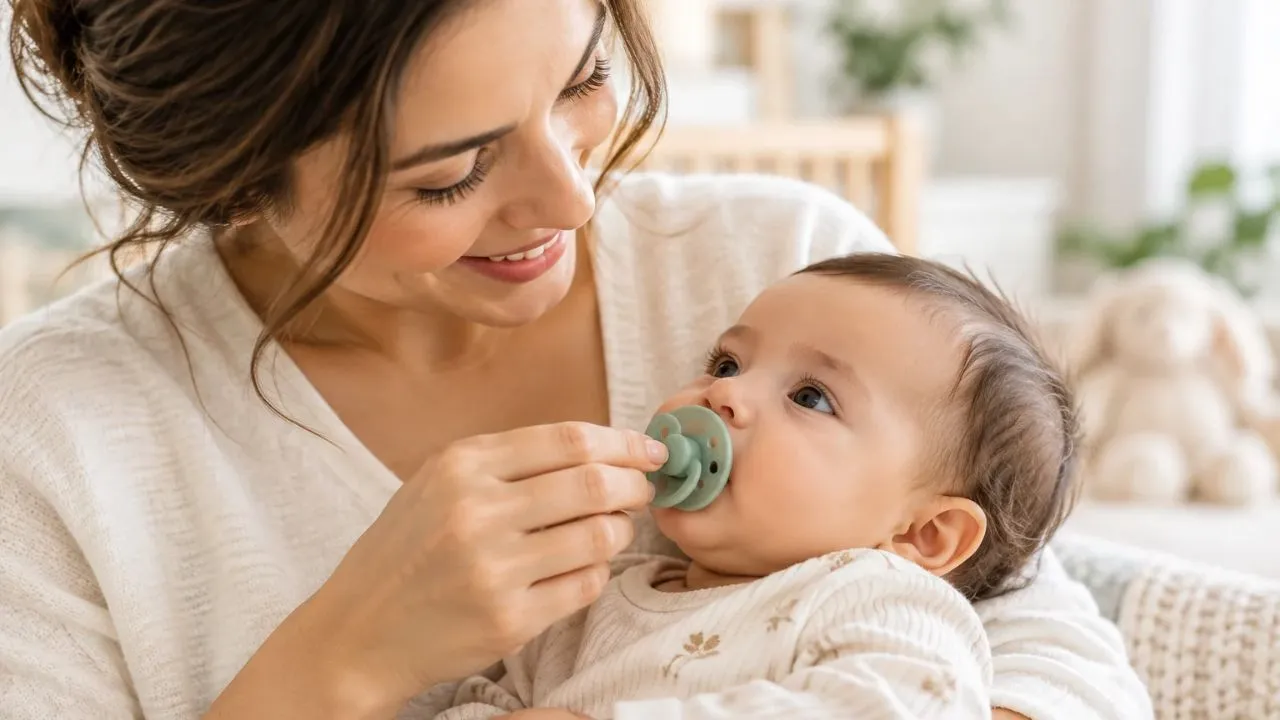
1. Natursutten Natural Rubber Pacifier: Best overall
Why we recommend it: Natursutten stands out for its simple construction and plant-based material. Made from 100% natural rubber latex, each pacifier is molded in one piece, without separate plastic components or joints where dirt can collect.
Its soft, flexible design is gentle against a baby’s face, and its available nipple shapes and sizes give parents options as their baby grows.

Best for: Parents who prefer natural materials, minimal components, and an alternative to conventional silicone pacifiers.
Keep in mind: Natural rubber contains latex and isn’t suitable for babies with a known latex allergy. It can also change texture or show wear over time, so regular inspection and replacement are important.
2. Philips Avent Soothie: Best for newborns and latex avoidance
Why we recommend it: Philips Avent Soothie is a practical newborn choice because it’s made from 100% medical-grade silicone with a one-piece design. It contains no natural rubber latex, making it a suitable material alternative for babies who need to avoid latex.

Its soft, symmetrical nipple and easy-to-clean construction make it a straightforward option for everyday soothing. Soothie pacifiers are also widely used in US hospitals.
Best for: Newborns aged 0–3 months, especially families seeking a latex-free silicone pacifier.
Keep in mind: Choose the correct age-labeled version. The featured 0–3 month model isn’t intended for older babies.
3. Chicco PhysioForma Soft Silicone Pacifier: Best for 6 months+
Why we recommend it: Chicco PhysioForma offers a practical option for older babies with its 100% soft silicone, one-piece construction and orthodontic-style nipple.
The flexible shield has ventilation holes to encourage airflow around the mouth and reduce moisture buildup. Its smooth construction has no separate hard plastic shield, and the 6–16 month version provides an age-appropriate option as babies grow.

Best for: Babies aged 6–16 months whose parents want a latex-free, one-piece silicone pacifier with an orthodontic nipple.
Keep in mind: Nipple preferences vary between babies, and an orthodontic design doesn’t guarantee better dental outcomes. Always follow the recommended age range and inspect the pacifier before use.
Shape matters, but habits matter too
An orthodontic pacifier often has a flattened or asymmetrical nipple; symmetrical nipples have matching upper and lower surfaces. Round nipples are another established design.
Nipple shape is one point to consider when comparing fit. No design guarantees healthy tongue placement, breastfeeding success, or unchanged teeth. Don’t rule out every round nipple, and don’t assume a breastlike description proves a developmental benefit.
Offer the pacifier when your baby needs soothing, rather than keeping it in throughout play and interaction. For older babies, time without it leaves room for babbling, exploring and responding to you.
How we chose these pacifiers
Our shortlist prioritizes official material descriptions, single-piece construction and useful age options. It follows the material-first approach in our non-toxic baby feeding recommendations, where broad labels don’t identify substances or exposure.
Materials and construction before marketing
The CPSC’s toxicity definition covers substances that can cause injury or illness through swallowing, inhalation or skin absorption.
Look for the actual material and disclosures about BPA, BPS, PVC, phthalates, and lead. Some phthalates can interfere with hormone function, as explained by the US Environmental Protection Agency. A BPA-free statement doesn’t cover phthalate disclosures, so check the product’s specific information for phthalates.
Medical-grade and food-grade silicone are material descriptions, not interchangeable whole-product certifications. “Hypoallergenic” doesn’t replace a clear material list.
Single-piece construction reduces the chance of parts separating. A suitable shield needs ventilation and must resist entering the mouth, as addressed by US pacifier safety requirements.
Buy directly from the brand or an authorized retailer when possible. On marketplaces such as Amazon, the seller matters as much as the listing photo.
Other good options
HEVEA Natural Rubber Pacifier is another good choice for families who prefer soft, plant-based natural rubber. Its pacifiers are made from 100% natural rubber latex in a seamless, one-piece design. HEVEA is an alternative rather than a main pick here, and it is not suitable for someone who needs to avoid latex.

BIBS Supreme offers silicone and natural rubber latex nipple versions, but its separate shield doesn’t match this shortlist’s all-silicone, single-piece priority.
MAM Original is another established option with silicone and latex nipple versions, but its separate shield and nipple also place it outside these three recommendations.
Cleaning, replacement and weaning
A documented material is only part of the decision. Daily condition, cleaning and how long your child uses the pacifier matter too.
Keep cleaning simple and replace damaged pacifiers
Wash and sterilize the pacifier according to the model’s instructions. Silicone tolerates heat, but dishwasher and sterilizer compatibility depend on the finished product, not just its material.
Inspect the nipple and shield before offering it. Tears, cracks, stickiness, swelling, or a loose part mean it’s time to discard it. Replacement intervals vary by manufacturer, so don’t apply a universal four-to-eight-week rule.
Keep a clean spare ready for the inevitable floor drop. Never repair a damaged pacifier or add beads, decorative covers or homemade attachments.
Begin reducing use before the third birthday
The American Academy of Pediatric Dentistry’s pacifier policy describes how prolonged use can affect the developing mouth, including open bite and crossbite. Ask your child’s dentist about concerns related to prolonged use.
Start reducing use around 18 to 24 months, with complete weaning by age 3. Begin weaning by limiting pacifier use to settling periods, then build other comforting routines.
An orthodontic label doesn’t remove the need to limit prolonged pacifier use.
For sleep, place your baby on their back on a firm, flat surface with only a fitted sheet. Never attach a pacifier to clothing, a cord or a soft toy during sleep. If it falls out after your baby falls asleep, you don’t need to replace it.
Frequently asked questions
Is silicone better than natural rubber?
Neither material is automatically better for every baby. Natural rubber pacifiers such as Natursutten and HEVEA are soft, plant-based, and made in seamless one-piece designs. Natural rubber can change color or texture with use and must be replaced when it shows wear.
Silicone is a good alternative when avoiding natural rubber latex. If your baby has a known latex allergy, choose a pacifier made entirely from silicone, such as the appropriate age-labeled Philips Avent Soothie or another verified one-piece silicone model. If an allergy is suspected, ask your pediatrician for guidance.
Do doctors recommend avoiding pacifiers?
Pacifiers have benefits as well as limitations. The Mayo Clinic’s pacifier guidance describes their soothing role and association with a lower risk of sudden infant death syndrome during sleep.
If you’re breastfeeding, wait until feeding is established before introducing one. A pacifier shouldn’t delay a feed or hide ongoing feeding difficulties, and you don’t need to persuade a baby who doesn’t want one.
Are BIBS pacifiers latex-free?
Some versions are, and others aren’t. BIBS Supreme comes with either a silicone nipple or a natural rubber nipple that contains latex.
Choose the silicone version if you need to avoid it. The brand name, shield color, general appearance and a “hypoallergenic” label don’t identify the nipple material on their own, so buy by the named material version.
Start with one suitable pacifier
Natursutten is our best overall choice for families who prefer a one-piece natural rubber pacifier. Choose Philips Avent Soothie for a latex-free silicone option in its labeled newborn size. For babies 6 months and older, Chicco PhysioForma Soft provides a latex-free, one-piece silicone option in a labeled 6–16 month size.
Buy one small pack, give your baby time to respond, and keep the routine simple. A suitable fit, an intact pacifier, sensible use limits, and gradual weaning matter over time.